
The Environmental Justice and Climate Protection Conference (EJCP) is meant to bring together community leaders, concerned citizens, elected officials, academics, and industry experts to break information silos through information sharing focused on identifying solutions to heal and improve the health and environment of all Georgians. It focuses on addressing environmental and climate issues that impact communities, especially those most affected. The goal is to share knowledge, hear different perspectives, and work together to identify practical steps that can improve health and environmental outcomes right now.
At the 2025 EJ&CP attendees from across Georgia shared their perspectives on environmental justice and climate protection through a concept mapping process designed to capture real experiences, priorities, and ideas for action. Below we share the results of this exercise – so that we can turn attendee’s voices into clear, actionable steps.
Overall – the exercise identified that people want solutions that begin in their communities, are easy to understand, and lead to meaningful, visible change. Rather than focusing only on awareness, participants emphasized the need for action that is practical, inclusive, and sustained over time.
Top Priorities Identified
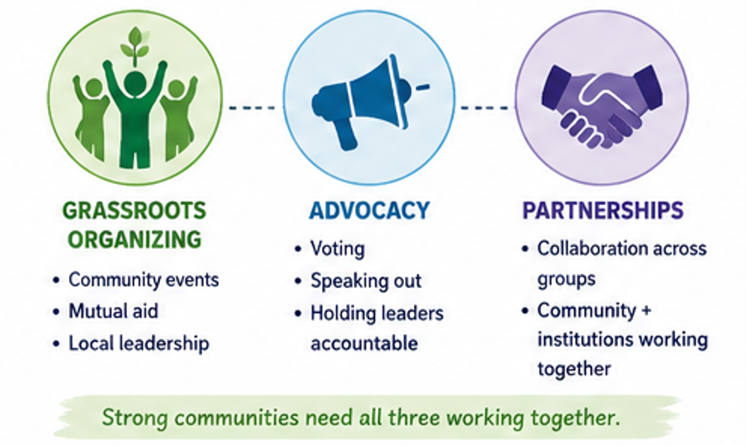
Examples of each priority area:
- Grassroots organizing and community building: town halls, multilingual resources, resilience hubs, and mutual aid efforts that are led by the people most directly impacted.
Concrete actions: block parties, church picnics, community gardens, swap meets, skill shares, pollution storymaps and data sharing.
- Advocacy: voting, speaking out, and holding decision-makers accountable for environmental and public health protections.
Concrete actions: get out the vote campaigns, days at the capitol, spreading the word about the time and location of community council meetings.
- Partnerships: stronger collaboration across environmental justice groups, community organizations, institutions, and local leaders.
Concrete actions: Involvement in existing groups, helping to identify communities around Georgia to reach out to.
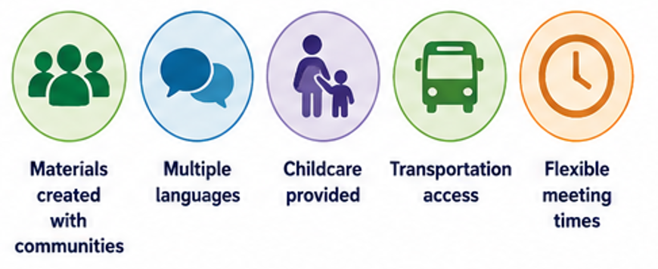
Below is what is needed to ensure all community members can participate to ensure inclusion:

Support Local Voices
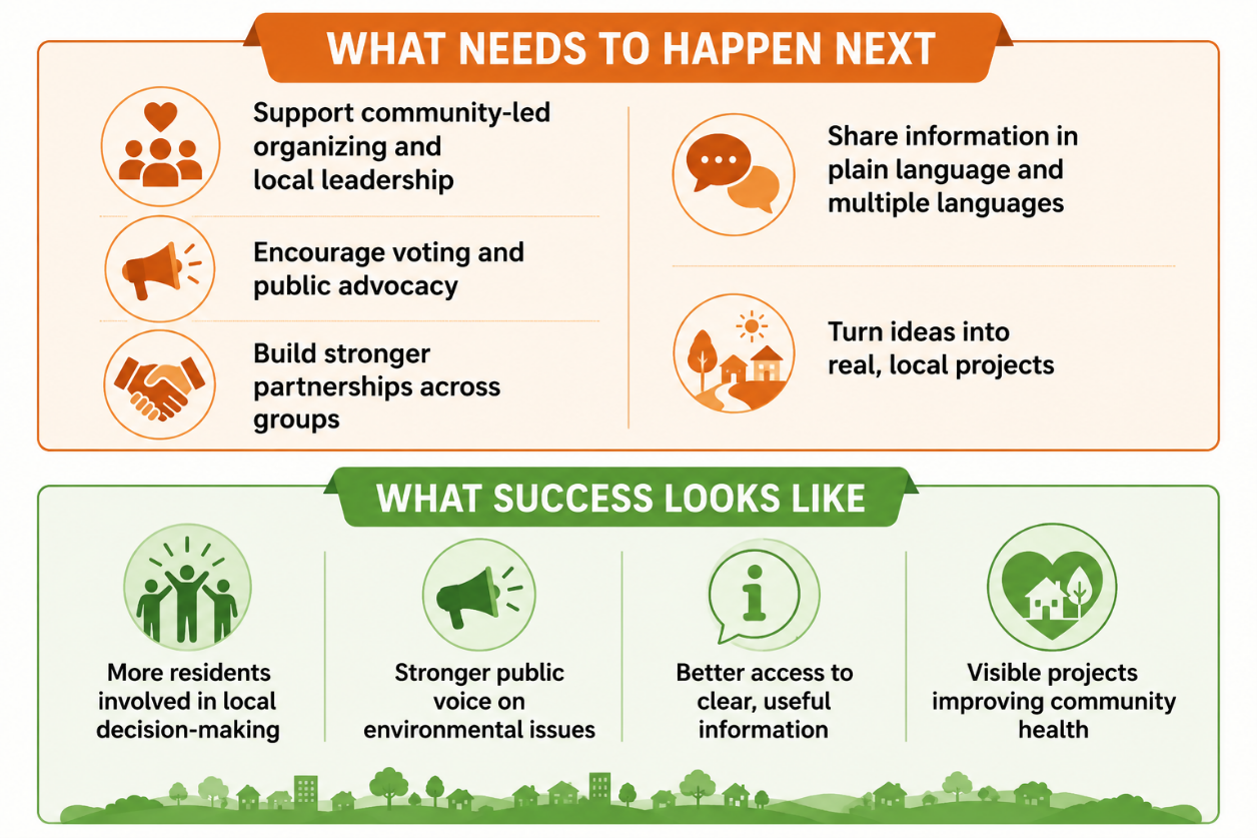
Across all responses, a consistent theme emerged: communities are not simply asking for more information but are asking for action. They want environmental justice efforts that are community-driven, practical, inclusive, and visible. This includes organizing locally, pushing for accountability, working collaboratively, making information accessible, and implementing real projects on the ground.
Ways to Create Change
Ways to Strengthen Community Health & Environmental Well-Being: Building on stakeholder input and supported by research and federal guidance, the following recommendations provide evidence-based approaches to protect and strengthen community health while advancing equitable decision-making.
Strengthen Community-Led Decision-Making Structures.
Supporting community-led governance, such as advisory boards, participatory planning processes, and local leadership development, ensures that those most affected by environmental and health challenges have a direct role in shaping solutions.
Research shows that meaningful community involvement leads to more effective and equitable environmental and public health outcomes. When communities are actively involved in decision-making, policies and programs are more responsive to local needs and more likely to be trusted and sustained.
How this supports equitable decision-making
- Centers the voices of frontline and historically underrepresented populations
- Builds shared power between communities and institutions
- Ensures decisions reflect lived experiences and local priorities
Expand Access to Clear, Action-Oriented Environmental and Health Information.
Providing multilingual, plain-language, and culturally relevant information enables individuals and communities to understand risks and take informed action.
Evidence shows that accessible communication improves public understanding, engagement, and participation in health and environmental decisions. When information is clear and actionable, communities are better equipped to advocate for themselves and participate in policy processes.
How this supports equitable decision-making:
- Reduces barriers to participation caused by language, literacy, or technical complexity
- Increases transparency and trust in institutions
- Empowers communities to engage in advocacy and decision-making processes
Invest in Place-Based Environmental Interventions.
Implementing tangible, community-level projects (e.g., green spaces, pollution reduction efforts, and resilience infrastructure) can directly improve environmental conditions and health outcomes.
It has been demonstrated that place-based interventions, such as greening vacant lots, are associated with reductions in violence and improvements in community health. These types of projects provide visible, immediate benefits while addressing long-term environmental risks.
How this supports equitable decision-making:
- Prioritizes investments in communities with the greatest need
- Demonstrates responsiveness to community-identified priorities
- Creates opportunities for community participation in planning and implementation
Learn More
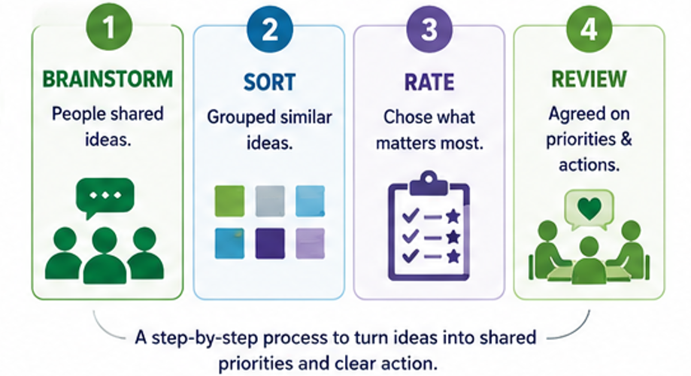
What is Concept Mapping?
Concept mapping is a step-by-step group process that turns ideas into shared priorities and clear action steps by brainstorming, organizing, and rating input together.
References
Branas, C. C., Cheney, R. A., MacDonald, J. M., Tam, V. W., Jackson, T. D., & Ten Have, T. R. (2011). A difference-in-differences analysis of health, safety, and greening vacant urban space. American Journal of Epidemiology, 174(11), 1296–1306. https://doi.org/10.1093/aje/kwr273
Executive Order No. 12898, 59 Fed. Reg. 7629 (1994). Federal actions to address environmental justice in minority populations and low-income populations.
National Academies of Sciences, Engineering, and Medicine. (2017).
Communicating science effectively: A research agenda. National Academies Press. https://doi.org/10.17226/23674
O’Fallon, L. R., & Dearry, A. (2022). Community-based participatory research as a tool to advance environmental health sciences. International Journal of Environmental Research and Public Health, 19(9), 5376. https://doi.org/10.3390/ijerph19095376