
Thanks to everyone who contacted the PSC in regards to the weird procedural quirk where the OpenAI contract with Georgia Power will be “deemed approved” if the PSC’s staff does not file an objection by Aug 26.
Alas – staff did not file an objection to the contract. OpenAI’s contract is now considered “approved,” without the elected Commissioners themselves having to weigh in.
But it isn’t all bad the letter sets up new requirements to help hold Georgia Power more accountable for the risks data centers bring.
- This new structure requires that all other data centers are on the hook for much of the risk if a fellow data center defaults on a contract.
- These protections aren’t iron-clad. There is a mechanism for Georgia Power to charge residential customers for leftover data center costs during a future “ratemaking proceeding.”
- Georgia Power must file a “public summary” of the OpenAI contract. Read it here.
- Georgia Power must also file:
- A “public summary” for all future large load contracts,
- A semi-annual report including: (a) an “operational update,” and (b) “an overview of the performance” of its “portfolio of” its data center customers
This would not have happened without your input! Stay strong. Keep up the good work.
A major OpenAI project that would cover 1400 acres and use 3.2 GW of power in Effingham County, GA was announced on Jul 22, 2026.
For reference, 3.2 GW of power is the output of three of the four nuclear reactors at Plant Vogtle.
Below we answer some FAQs about OpenAI and data centers. This is a work in progress and we welcome questions.
Learn more about data centers in general here – Data Centers: The Need for Transparency and Strategy – Science for Georgia
OpenAI is a for-profit company. The CEO is Sam Altman.
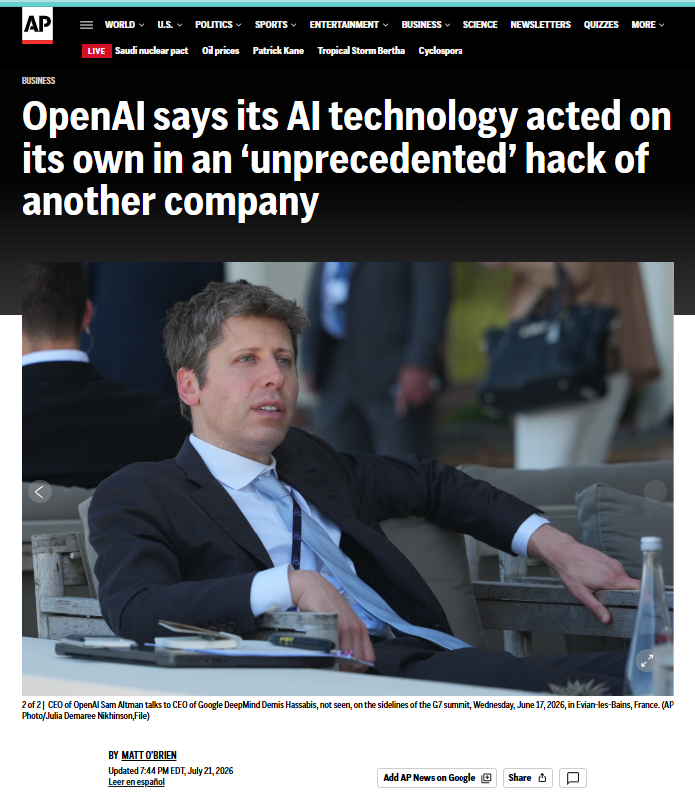
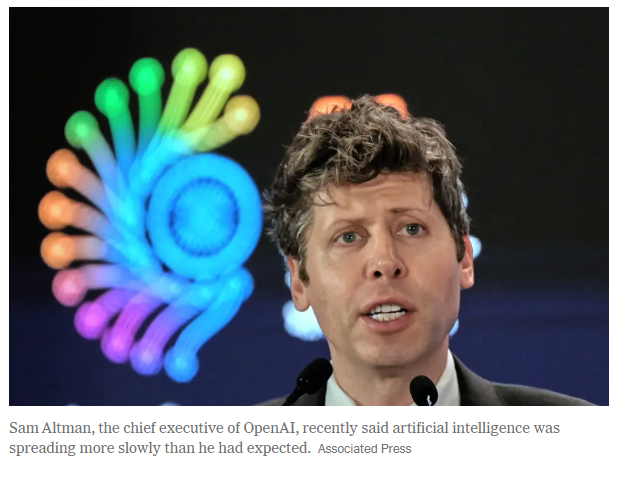
“The announcement comes on the heels of Effingham County Industrial Development Authority’s Tuesday night decision that OpenAI would receive a 50% property tax abatement for 15 years — an announcement that finally surfaced after weeks of uncertainty.” – OpenAI plans to build a $20B data center campus in Effingham County. Georgia Public Broadcasting | 22 Jul, 2026
Yet on the FAQ for the project – it says:

Several promises have been made on the FAQ including:
“OpenAI plans to provide $80 million in direct support for the local community over the life of the project, plus up to $71 million in Codex credits for eligible students across Georgia. These commitments are separate from projected tax revenue and broader economic activity. The final mix of local community investments will be reflected in the Georgia Community Compact as the project develops.”
“OpenAI will make up to $71 million in Codex credits available to approximately 721,000 eligible Georgia college, community college, and technical school students aged 18 and older during the 2026-2027 academic year. Eligible students will receive $100 in credits through their ChatGPT accounts to gain hands-on experience with agentic AI, build projects, and develop practical skills for careers across engineering, manufacturing, health care, education, entrepreneurship, and the skilled trades.”
But the Codex Credit seems to be offered to everyone in the US and Canada according to the site https://developers.openai.com/community/students. It is unclear if their offer is in addition to the credits students already have access to because the FAQ’s and Documents page for this project doesn’t have any documents.
QUESTION TO ASK: How much would the county get if they didn’t get the 50% property tax abatement and how does it compare to one $80 million dollar donation?
Not only does OpenAI not make a profit at this point, its CEO has consistently been accused of saying anything that he can to get what he wants with little concern for the people around him. Consider what he thinks of communities in GA if he treats his coworkers this way.
But let’s just look at the finances of the company:
2024 — OpenAI Had $3.7 Billion In Revenue, $12.4 Billion In Costs and Expenses, and a net loss attributable to the company of $5.09 Billion.
2025 — OpenAI Had $13.07 Billion In Revenue, $34 Billion In Costs and Expenses, and $20.92 Billion In Losses, with a net loss attributable to the company of $38.53 Billion
Please note that 2025 was the year that OpenAI converted from a non-profit to a for-profit entity, leading to a $41.55 billion loss due to changes in fair value of convertible interests and warrant liability.
On July 22, 2026, TechCrunch noted that OpenAI is now claiming they will spend $750 billion dollars on data centers yet, Stargate data center has stalled because costs are soaring.
Fast Company reported in April that OpenAI doesn’t expect to be profitable until 2030, but the amount of debt they are incurring coupled with corporate pullback from LLMs like OpenAI because they see no return on investment (ROI) creates doubt that profits could materialize. Now, with opensource AI models that can run on your own servers or computer, companies are finding cheaper alternatives.
If this project is reliant on Oracle, OpenAI might have an issue finishing the project as we are seeing with Stargate. Oracle’s rating on the market is one step above a junk bond, why? Because it is stuck in a cash to debt cycle and there is no light at the end of that tunnel. Additionally, investors are suing Oracle for not disclosing debt connected to OpenAI to the tune of $56 billion.
QUESTION TO ASK: Can OpenAI afford a surety bond that could pay for decommissioning and restoration of 1400 acres?
Below is from Project Camellia FAQs and Documents page (which has no supporting documents). Under water use it says:
The project is planned to use a closed-loop water system that recirculates water rather than continuously withdrawing and discharging large additional volumes. It works like a car radiator and is designed to keep ongoing water use low. The initial water supply would be sourced in a way designed not to affect community water needs, and the project would not rely on local public water supplies for ongoing cooling. Once fully built, the project is expected to employ thousands of people. Ongoing water use will primarily support ordinary workplace needs, such as sinks, restrooms, kitchens, sanitation, and maintenance, and is expected to be comparable to that of other workplaces with a similar number of employees. OpenAI also plans to share water-usage data publicly.
Let’s highlight some things from that paragraph
- “The initial water supply would be sourced in a way designed not to affect community water needs, and the project would not rely on local public water supplies for ongoing cooling.”
Question to ask: Where are they getting the water from? And how much water will actually be used? - “OpenAI also plans to share water-usage data publicly.”
Question to ask: How? Will they create a transparent resource use dashboard?
QUESTION TO ASK: Who are they contracted with for the architecture for this project? That will impact how much water will be used and how hot the surrounding area will become.
“While electricity from Georgia Power is expected to start flowing in 2028, OpenAI did not give a timeline for when the first GPU will be turned on. That could happen sooner than 2028 given that OpenAI recently hired Brett Mayo to lead data center construction. Mayo previously worked at xAI, where he oversaw the Colossus data center in Memphis.”(Techcrunch)
This facility is located close to proposed SSE4 gas pipeline expansion, namely the Rincon compressor station.
Question to ask: How can we guarantee that this will not be a behind-the-meter power station like the xAI in Memphis?
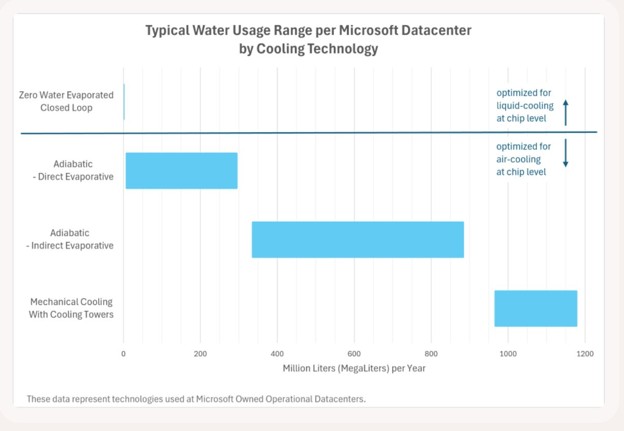
We can only speculate what the water use is. OpenAI may use Oracle hardware but as their February 9, 2026 article “In the simplest terms: The heat leaves the building; cooling liquid does not.” (Oracle) If OpenAI will be using this direct-to-chip, closed-loop, non-evaporative architecture, they claim “There is no evaporation, blowdown, or continuous makeup water requirement” but when the heat leaves the building, as it says, it will increase the temperature in the surrounding area. Yet in the section on their FAQs page they say the following. (bolding was by us)
“A: No, we do not expect the project to cause a noticeable change in temperatures in the surrounding community. Data center equipment is highly sensitive—and represents a substantial investment—so maintaining carefully controlled temperatures is essential to reliable operation. The facility’s cooling systems will be designed to manage and dissipate heat safely, with operating conditions continuously monitored. Simply put, effective temperature management is fundamental to protecting the equipment and keeping the facility operating properly.”
This is non-committal language. A 2026 Study showed that data centers create “local microclimate zones” or heat islands. The study found an average temperature change measured about 3.6 degrees F with highs of 16 degrees F above surrounding area temperatures.
QUESTION TO ASK: What will be done to measure the heat impacts and what funds are budgeted to address a heat island effect?
Maybe they will use the JetCool system by Flex who is working with Broadcom who entered into a $10 billion agreement with OpenAI while they still rely on Oracle’s Nvidia chips for other projects. This raises the same question about where the heat will go.

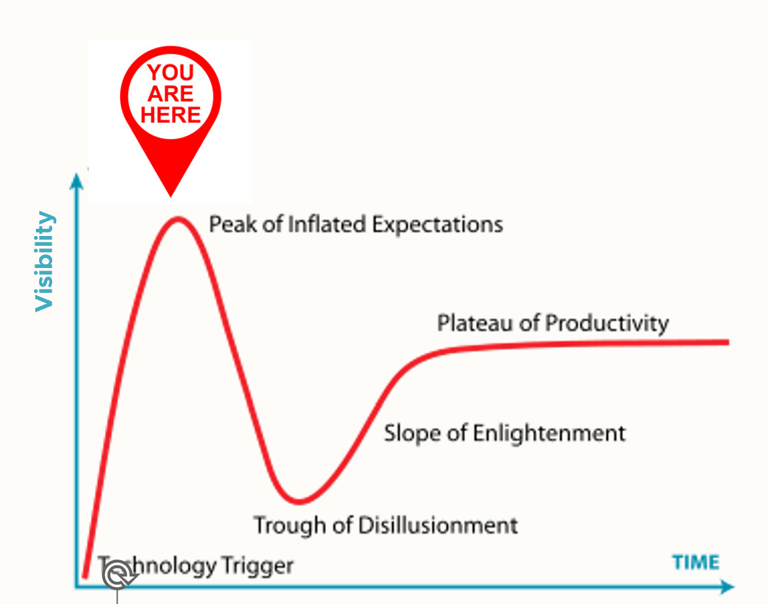
Probably – odds are “yes” as the AI hype is following a known economic cycle – the Gartner Hype Cycle – and most likely the AI boom is nearing the “Peak of Inflated Expectations.”
News stories that track to the “bubble”
Google and Tesla shares plunge as AI spending rattles markets | BBC | 23 Jul, 2026
IBM Lowers Its Growth Outlook as Sales of Data-Center Mainframes Sink 42% | WSJ | 22 Jul, 2026
A.I. Spending Sets a Record, With No End in Sight | The New York Times | 29 Apr, 2026
People Loved the Dot-Com Boom. The A.I. Boom, Not So Much | The New York Times | 21 Feb, 2026
Adoption has plateaued. In the fourth quarter of 2025, 38 percent of employees told Gallup that their workplace had integrated A.I. technology. That number was essentially unchanged from the third quarter…A.I. is clearly not technology that is being universally encouraged as inevitable. Corporations often report that, so far, it does not seem to do much.
Big tech is taking on more debt than ever before to fund its AI aspirations | The Washington Post | 23 Jan, 2026
In the past few months – it has been revealed that Open AI’s bots have hacked a competitor and also several government agencies.
OpenAI pauses training of its latest models as evidence of agents going rogue mounts | AP News | 26 Sept, 2026
Why the Hugging Face Hack Should Make You Worry More About A.I. – The New York Times | 3 Sept, 2026
OpenAI AI models hacked Hugging Face on their own, ChatGPT maker says | AP News | 21 Jul, 2026